Director: Chloé Zhao
Writer: Chloé Zhao, Maggie O’Farrell (screenplay); Maggie O’Farrell (novel)
Country of Origin: U.K./U.S.A.
One could possibly write an entire book on the glut of movies and television shows that have mis-represented birds in one way or another over the past ninety-plus years. Not simply in terms of outlandish and inaccurate bird behavior (e.g. Hitchcock’s The Birds), but also in less insidious ways.
Things like:
The use of a Red-tailed Hawk call anytime a Bald Eagle appears on screen. Or a bird song or call in a geographic setting where those birds would never actually be found.
These minor annoyances (to a birder, anyway) continue right into the present day with the release of Chloé Zhao’s Oscar-nominee Hamnet (2025).
I won’t go into the film itself to any degree. I thought it was generally quite good, with only a few hairline cracks to nitpick about. It’s certainly not the most cheerful film of the year, and in that regard, it’s a genuinely heavy experience. But I love a good sad or melancholia-fueled cinematic vision more than most, so I was perfectly fine to take on all that weight.
One of the key stories explored throughout the film is the bond between Agnes Shakespeare, née Hathaway – played by Jessie Buckley – and the natural world. For my money, it’s the thematic thread that effectively holds the narrative together.
In today’s world of disconnection and apathy, this particular topic is becoming increasingly relevant. To see it play out on the big screen in the ways it does in Hamnet was a little surprising, to be honest. But a very welcome surprise, obviously.
Perhaps just a tad bit unfortunately, however, this theme happens to be the source of my only real complaint with the film. If you’ve watched it, or maybe if you’ve only seen the trailer or glanced at the poster…
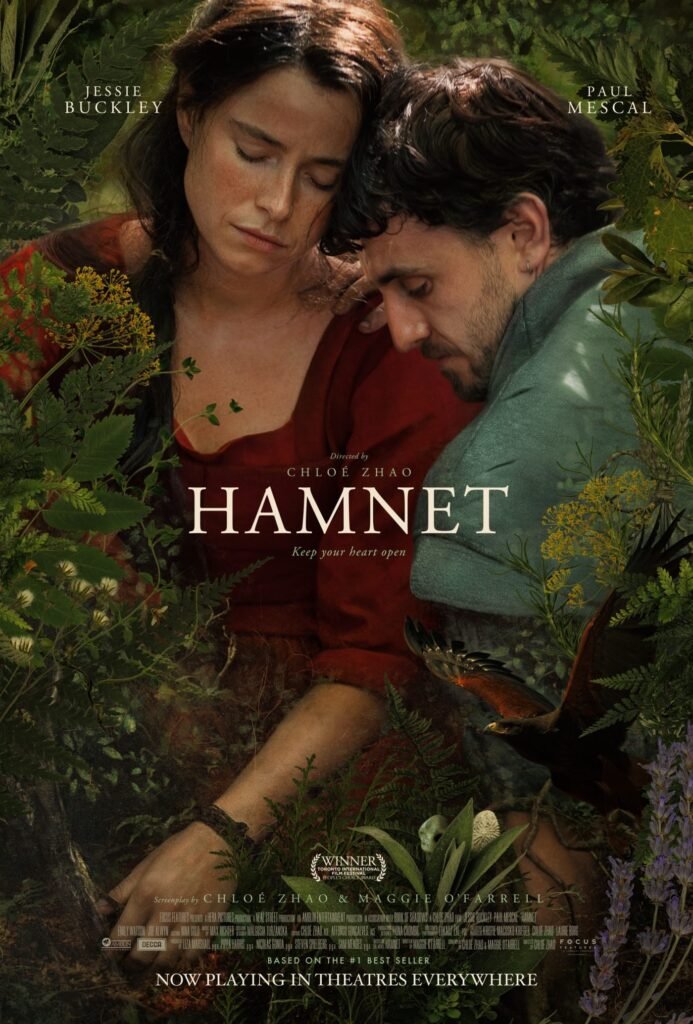
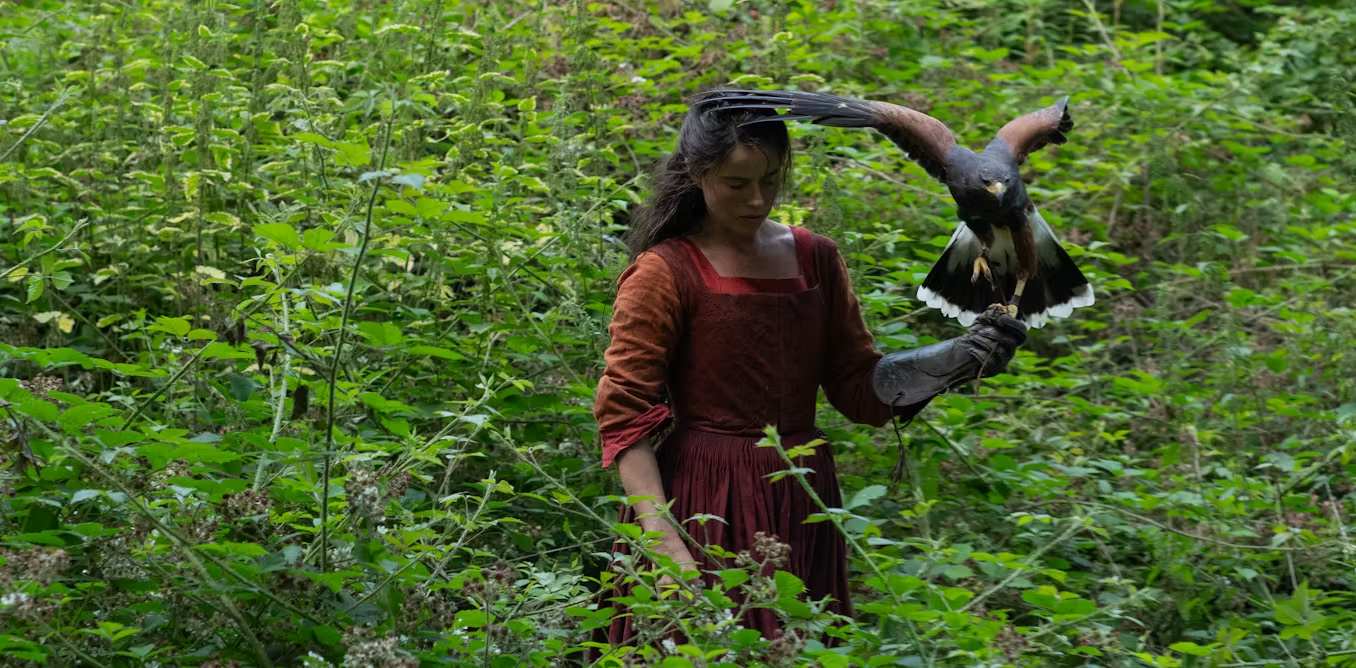
…you’ll likely know that Hamnet features a hawk. Agnes’ sort-of ‘pet’ hawk. You can see it at the bottom right on the poster, but here’s a shot from the film, in case you’re in doubt:
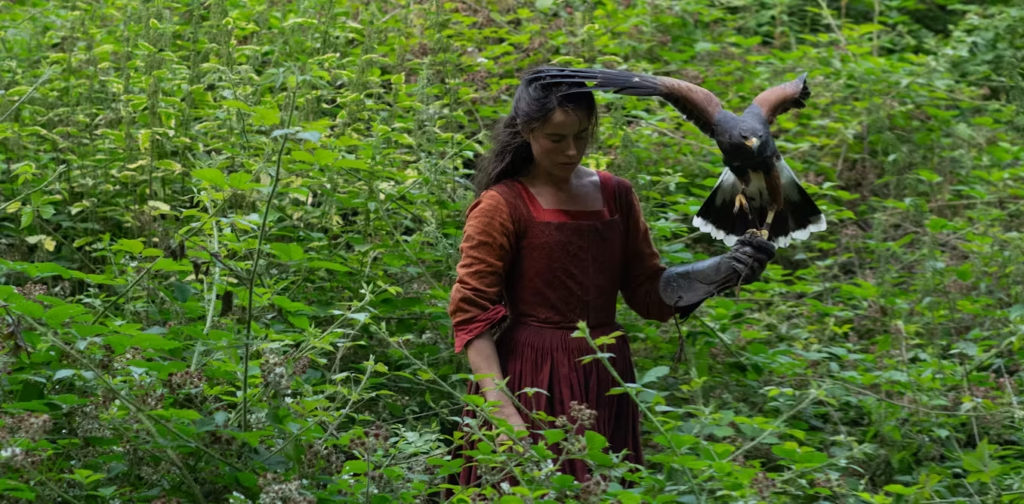
Though only appearing in the film for a few minutes, the hawk does add some important thematic value to the story and the character arcs. At no point in the film is the species of hawk mentioned. It’s simply referred to as a ‘hawk’.
As we all know, of course, discerning the exact species of hawk used in the film is ridiculously easy. Given our current technology and resources. Well, as it turns out, it’s a Harris’s Hawk (Parabuteo unicinctus).
Here’s a range map for the Harris’s:
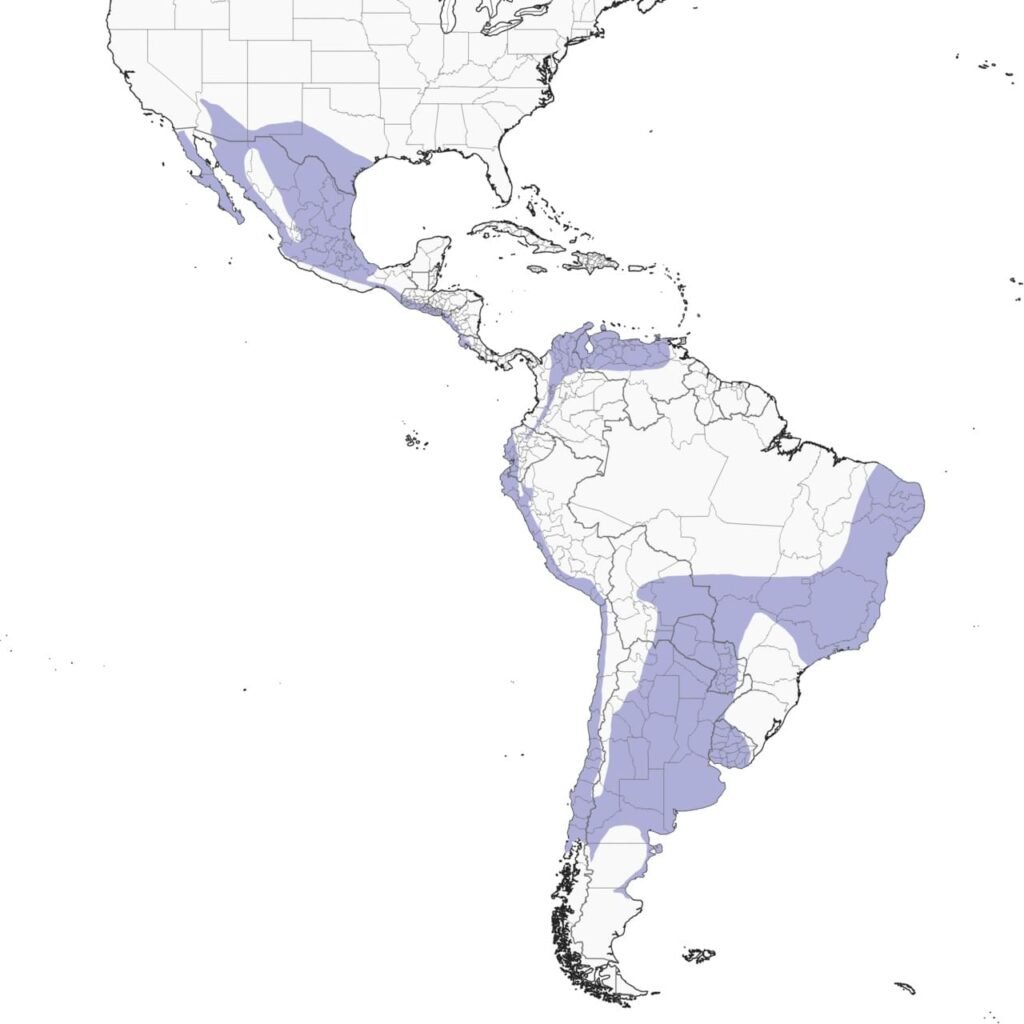
So…their range covers a bit of North America…a bit of Central and South America…and…that’s it.
They aren’t found in England. Or anywhere in Europe, for that matter. In fact, you won’t find one anywhere outside of the Americas. Not now and not in the late sixteenth century, when Hamnet takes place.
So what gives? Why a Harris’s and not a raptor native to England? Why not a Northern Goshawk? Or a Red Kite?
Well, as far as I can tell, the reason was one of practicality for the filmmakers. According to the CornellLab’s All About Birds page on the Harris’s Hawk, “[it’s] social nature and relative ease with humans has made it popular among falconers and in education programs.”
Ok, so I guess I kind of get it. They’re easy to work with. Which is certainly not true of most raptors. So…fine. It is what it is. Sure, it’s another pop culture birding flub, but I suppose I can live with it. I mean, what else am I (or any other birder) going to do? Write angry letters?
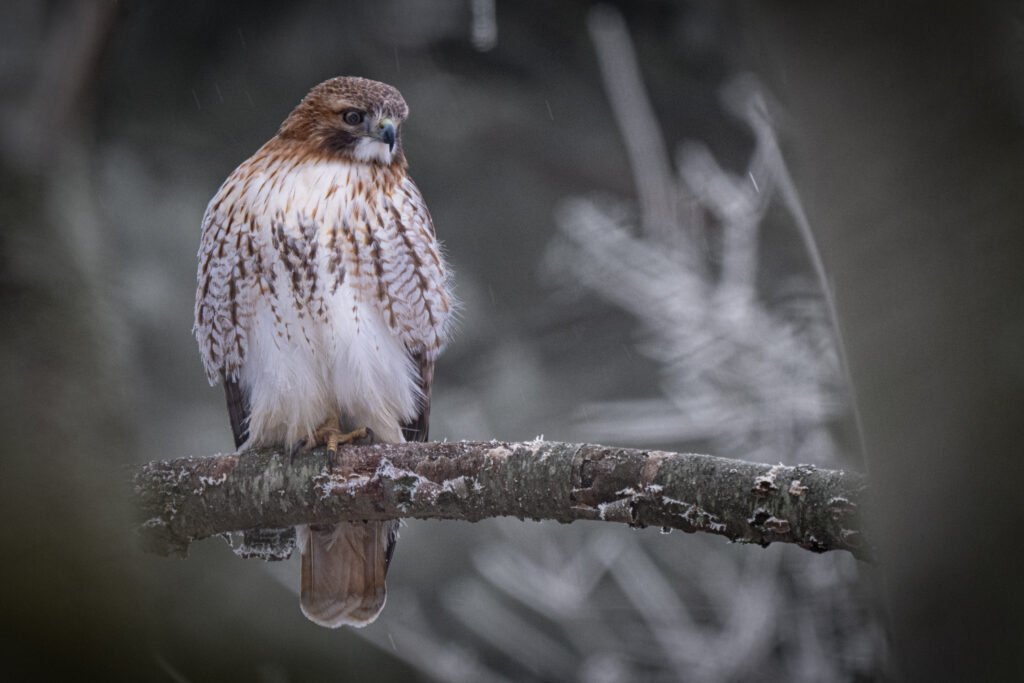
I don’t have any photos of a Harris’s Hawk. In fact, I’ve never seen one. Not yet. But here’s a Red-tailed Hawk, the official vocal stand-in for the Bald Eagle in virtually every film ever made: